
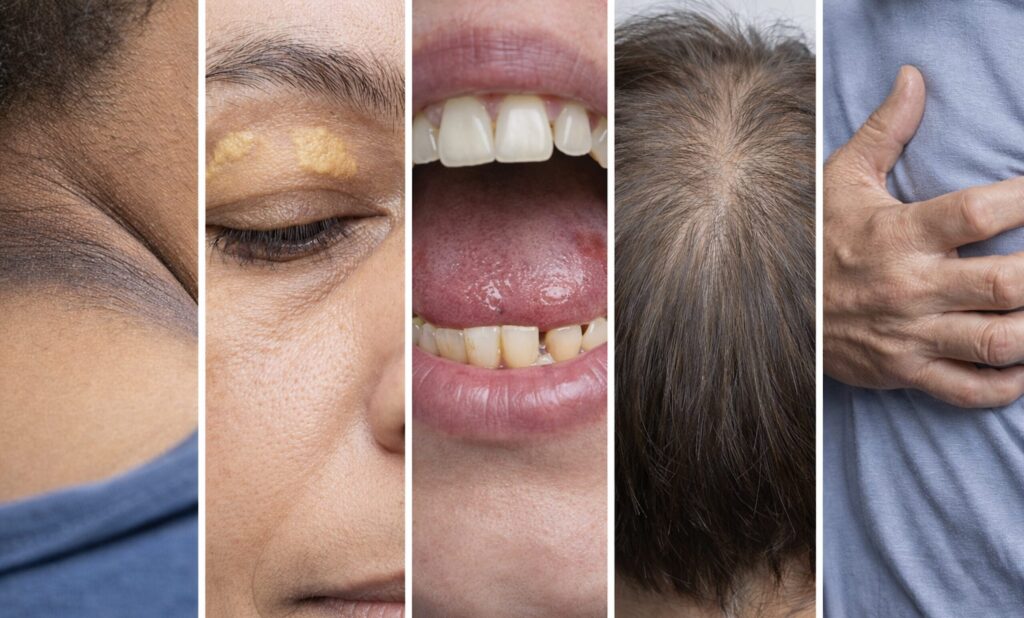
A Functional Health View of Early Signs of Deeper Dysfunction
Executive Summary
Many people live for years with signs that the body is under strain, yet those signs are often dismissed as minor, cosmetic, age-related, or unrelated. A change in the skin, recurring gum bleeding, looser teeth, mouth ulcers, hair thinning, unusual nail changes, stubborn joint pain, poor recovery, or shifting body composition may appear small when viewed one by one. However, when these signs are read in context, they often reveal something much more important. They can reflect deeper dysfunctions and adaptations taking place beneath the surface, including insulin resistance, chronic inflammation, disturbed immune activity, nutrient shortfalls, digestive dysfunction, altered lipid handling, vascular stress, and changes in how the nervous system and hormones regulate the body. Over time, these same processes can contribute to heart disease, rising cholesterol problems, high blood pressure, arthritis, bowel disease, memory decline, and in some cases even cancer.
This is where the gap often begins. Modern life creates a constant low-grade burden on the body through poor food quality, long working hours, disrupted sleep, stress load, sedentary time, environmental burden, overuse of stimulants, and fragmented recovery. At the same time, conventional medical care is usually structured around diagnosing established disease and managing visible damage, rather than interpreting earlier patterns of dysfunction before that damage is clear. As a result, outward signs are often treated as separate local problems. A skin issue may be managed as a skin issue. Bleeding gums may be treated as a dental issue. Hair loss may be blamed on age. Joint symptoms may be seen only as wear and tear. Yet the body does not work in isolated compartments. It works as one connected system, and it often starts speaking long before disease becomes obvious on a scan, in a diagnosis, or in a crisis.
That is why these signs matter. They are not always diagnostic on their own, and they should never be used carelessly to assume disease. However, they are often meaningful clues. They tell us where to look, what to question, and which biological systems may be drifting away from healthy function. In that sense, they are part of the body’s early language. They show how the body is adapting to pressure, compensating for weakness, and trying to protect survival in the face of cumulative load. When that load continues unchecked, adaptation can slowly become dysfunction, and dysfunction can become disease.
A functional health and longevity approach takes these signals seriously and asks a different question. Instead of asking only what disease has already formed, it asks why the body is showing these signs now, what pattern connects them, and what deeper processes are driving them. That changes the whole quality of the conversation. It allows earlier recognition of root drivers and gives more room to restore function, improve resilience, and reduce longer-term risk. In practice, that means looking carefully at the whole picture. Symptoms, visible signs, blood markers, body composition, digestive response, stress pattern, sleep rhythm, food response, life demands, and behaviour all need to be read together. That is how real clarity begins. A recurring mouth ulcer, a change in the gums, darkened skin folds, skin tags, thinning hair, tendon thickening, poor wound healing, or inflammatory joint pain may each point toward a different doorway into the same underlying pattern. When viewed properly, those doorways lead to the deeper story.
This paper explains that story. It shows what these body signs often mean, how they may connect to major chronic diseases, what may be happening underneath in real biology, why these signals are so often missed in modern life, and how a functional approach uncovers and addresses them in practice. The goal is earlier understanding, better decisions, and a more reliable path toward health, performance, resilience, and longevity.
The Body Leaves Clues Long Before Disease Is Named
One of the biggest mistakes in health is to assume that disease begins only when a test result becomes abnormal, a scan shows damage, or a diagnosis is finally given a name. In reality, the body usually moves through a much longer period of strain before that point. During that period, it works hard to adapt, compensate, and keep you functioning. That is why many people can still go to work, exercise, travel, and manage daily life while deeper dysfunction is already building underneath. The body is remarkably intelligent in this way. It protects short-term survival first. However, the price of that protection is that it often leaves clues on the outside while the deeper process continues quietly on the inside.
Those clues can appear in places people least expect. The skin may darken in folds, become unusually dry, itch, bruise, or heal more slowly. The gums may bleed more easily, recede, or become chronically inflamed. Teeth may show signs of enamel weakness, grinding, or changing support. Hair may thin, shed more, or lose quality. Nails may become brittle, ridged, pale, spoon-shaped, or clubbed. Joints may stiffen, swell, ache, or recover poorly. Mouth ulcers may return again and again. None of these signs automatically means serious disease is present. Yet they are often signals that the internal environment is no longer as stable, nourished, regulated, or resilient as it should be.
To understand why, it helps to see the body as a connected network rather than a collection of separate parts. The skin, mouth, hair, nails, joints, gut, blood vessels, brain, and immune system are all influenced by the same core biological drivers. These include blood sugar control, insulin signalling, inflammation, immune balance, nutrient sufficiency, digestive absorption, circulation, hormone function, toxic load, and nervous system regulation. When these drivers are working well, the body tends to repair, defend, and regulate itself with greater ease. When they begin to drift, the first changes may show up in tissues that turn over quickly or that are exposed to constant stress, such as the gums, skin, hair follicles, gut lining, and joint surfaces.
This is why apparently different signs can come from related underlying patterns. Chronically inflamed gums may also reflect a body carrying more inflammatory load, poorer blood sugar control, weaker immune balance, or less effective tissue repair. Dark velvety skin in body folds may be a visible sign that insulin is having to work too hard because the body is becoming resistant to it. Hair thinning may reflect nutrient deficiency, thyroid imbalance, stress overload, inflammatory burden, or poor protein intake. Recurring mouth ulcers may point toward digestive dysfunction, immune irritation, or deficiency states. Joint pain may not simply be mechanical wear. It may also reflect immune activation, unresolved inflammation, altered gut function, or tissue stress that is no longer repairing well.
Seen through this lens, the body is communicating with you. The problem is that in modern life many people have lost the habit of reading those signals properly. Instead, they normalise them, cover them, suppress them, or separate them into different specialist boxes. One practitioner may look only at the skin. Another may look only at the teeth. Another may focus only on blood pressure, cholesterol, pain relief, or bowel symptoms. Each action may help in part, and sometimes it is necessary. Yet the deeper pattern can still be missed if no one steps back and asks what connects these signs together. By the time disease is obvious, the body has often been signalling for a long time. The tragedy is that the signs were present but not understood.
What Is Happening Underneath
To make sense of these outward signs, we need to understand what the body is actually doing underneath. Most chronic disease begins as a change in regulation. In simple terms, the body starts losing some of its ability to keep key systems steady and responsive under the pressures of modern life. Over time, that cost can show up as visible changes in the tissues that are easiest to disturb or hardest to maintain when the system is under pressure.
One of the most important underlying processes is chronic low-grade inflammation. This is a quieter, more persistent form of biological irritation that keeps the immune system slightly activated over long periods of time. This can happen when blood sugar swings are frequent, sleep is poor, nutrient density is low, stress remains high, the gut barrier is weakened, toxins accumulate faster than the body can clear them, or infections and oral disease are left unresolved. When inflammation becomes a background state, tissues do not repair as cleanly, blood vessels become more vulnerable, joints become more reactive, gums become easier to inflame, and the brain may receive a less stable internal environment over time.
Another major process is insulin resistance. This means the body is becoming less responsive to insulin, the hormone that helps move glucose and manage fuel. When cells stop responding properly, the body often produces more insulin to force the job to get done. For a while this may keep blood glucose in a normal-looking range, which is why the problem can stay hidden. However, the higher insulin and unstable fuel handling underneath can begin affecting skin, blood vessels, fat storage, inflammation, and repair. Energy becomes less stable. Hunger patterns change. Triglycerides rise. Blood pressure can drift upward. Over time, this metabolic strain can help drive atherosclerosis, fatty liver, type 2 diabetes, and broader cardiovascular risk.
Nutrient insufficiency is another core driver. A person can eat enough calories and still lack the nutrients needed for healthy tissue turnover, enzyme function, immune defence, oxygen handling, and repair. Hair, gums, nails, skin, and the lining of the mouth are especially sensitive to this because they depend on steady renewal. If digestion is poor, stomach acid is low, bile flow is weak, gut inflammation is present, or food choices are narrow and processed, the body may struggle to build and maintain these tissues properly.
The gut itself plays a central role because it is a major interface between the outside world and the internal body. It helps absorb nutrients, regulate immunity, maintain a protective barrier, and shape inflammatory tone. When gut function is disturbed, several things can happen at once. Nutrients may be less well absorbed. Immune reactivity may rise. The gut lining may become more permeable, meaning unwanted substances can cross more easily and provoke the immune system. Symptoms may remain local, such as bloating or bowel changes, but the effects can travel much further. Skin can worsen. Joints can become more reactive. Energy can drop. Brain fog may rise. Mouth ulcers can recur. In some people, the mouth becomes one of the first visible places where bowel or immune dysfunction begins to show itself.
Circulation and vascular health are another hidden layer. The body relies on healthy blood vessels to deliver oxygen, nutrients, hormones, and immune cells where they are needed. When vascular function begins to weaken, tissues that depend on fine circulation may show early changes. Gums may heal poorly. Skin may become less resilient. Wound healing may slow. Blood pressure may rise because the vessel system is becoming stiffer, less responsive, or more inflamed. Meanwhile, cholesterol transport can become more disturbed, because the wider metabolic and inflammatory environment is changing.
The nervous system deserves more attention than it usually gets. In modern life, many people live in a state of chronic alert. Deadlines, poor sleep, emotional strain, overtraining, under-recovery, digital overload, and constant decision-making all keep the body leaning toward survival mode. In that state, blood sugar control can worsen, digestion can weaken, inflammation can rise, immune balance can shift, and repair can be delayed. This is not just psychological. It is biological. The body is allocating resources according to perceived demand. If the demand never truly settles, the body starts prioritising short-term coping over long-term restoration.
Hormones add another layer. Thyroid function, sex hormones, cortisol rhythm, and insulin all help guide growth, repair, energy use, tissue maintenance, and stress response. When these signalling systems drift, the body becomes less precise in how it renews itself. Hair can thin. Skin texture can change. Sleep can deteriorate. Recovery can weaken. Weight distribution can shift. Mood and concentration can suffer. Joints can become more painful or less stable.
When all of this is put together, a clearer picture emerges. The body signs people notice on the outside are often the visible edge of deeper biological strain. They reflect how the body is trying to cope with cumulative pressures while losing some of its flexibility, efficiency, and repair capacity. That is why a functional view matters.
How Visible Signs Can Point Toward Major Disease
Once we understand that the body works as one connected system, the next step is to see how specific visible signs can point toward particular forms of deeper dysfunction. The aim is to recognise patterns that deserve attention before more serious disease becomes established. The sign itself is not usually the whole story. It is a clue to the story underneath.
The skin is one of the most visible places where internal dysfunction can reveal itself.
- Darkened, velvety skin in body folds, often around the neck, armpits, or groin, can be a sign that insulin is running high and the body is becoming less responsive to it. Skin tags can sometimes sit in the same picture.
- Slow wound healing, recurrent infections, unusual dryness, itching, shin spots, or changes in skin texture can also appear when blood sugar control, circulation, immune balance, or tissue repair are not working well.
- Yellowish fatty deposits around the eyelids or tendons may point toward disturbed lipid handling, which matters because poor lipid regulation and vascular inflammation can contribute to plaque formation in arteries.
- In certain cases, sudden or unusual skin changes can even reflect an underlying cancer process.
The mouth and gums are equally important, and in many ways they are among the strongest windows into deeper disease risk.
- Chronic gum inflammation, bleeding when brushing, gum recession, persistent bad breath, loose teeth, and repeated dental breakdown are often treated as purely local problems. Yet the biology points to something larger. Inflamed gums can become a chronic source of immune activation and inflammatory burden.
- Bacteria and inflammatory mediators from unhealthy gums may enter the bloodstream and add to strain on blood vessels and the wider immune system.
- At the same time, poor glucose control can make gum tissue more vulnerable and healing less effective. The mouth becomes a mirror of the body’s inflammatory and metabolic state, while also feeding that state further if the problem is left unchecked.
- The mouth can also reveal bowel and immune disease in more subtle ways. Recurring mouth ulcers, swollen tissues, changes in the tongue, oral soreness, and enamel defects may be clues to coeliac disease, inflammatory bowel disease, nutrient deficiency, or ongoing immune irritation.
- If the gut is inflamed, malabsorbing, or immunologically dysregulated, the mouth may show signs long before the deeper problem is fully recognised.
Hair changes can also be revealing when viewed in context. Hair is metabolically demanding tissue. It needs enough protein, iron, zinc, essential fats, and a stable hormonal and stress environment to grow well.
- Therefore, when hair becomes thin, brittle, sheds excessively, or loses quality, the question should not be limited to appearance. It should include whether the body is undernourished, poorly absorbing nutrients, dealing with thyroid imbalance, carrying too much stress load, or diverting resources away from growth and repair.
Nails are often overlooked, yet they can provide simple and valuable information.
- Pale nails may suggest anemia or poor oxygen delivery.
- Spoon-shaped nails may point toward iron deficiency.
- Clubbing can be associated with chronic lung disease, bowel disease, heart conditions, or malignancy.
- Horizontal grooves can appear after major illness or intense systemic stress.
- Brittle, weak, or ridged nails may reflect nutrient gaps, thyroid issues, poor circulation, or long-standing inflammatory strain.
Joints tell a deeper story too.
- Pain, stiffness, swelling, and poor recovery may certainly be mechanical in part, especially with age, previous injury, or overuse. However, joints are also affected by systemic inflammation, immune activation, metabolic dysfunction, and altered tissue repair.
- When joint symptoms persist, migrate, flare unpredictably, or sit alongside bowel symptoms, gum disease, fatigue, poor sleep, or skin changes, a wider pattern should be considered.
Memory loss and cognitive decline may seem further removed from skin, gums, or joints, yet the links become clearer when we follow the biology. The brain depends on healthy circulation, stable glucose handling, good sleep, controlled inflammation, sufficient nutrients, and low chronic inflammatory load. Poor oral health and periodontal disease have been associated with higher risk of cognitive decline, and while that does not prove direct cause in every case, it fits a larger pattern in which inflammation, vascular stress, and immune activation affect the brain over time.
Major diseases should therefore not be viewed as isolated end points with no early language. Heart blockage, high blood pressure, cholesterol problems, bowel disease, arthritis, memory decline, and even some cancers often emerge from a long period of accumulating dysfunction. During that period, the body leaves signals in tissues that are visible, accessible, and often ignored.
Why Modern Life and Modern Medicine So Often Miss the Pattern
If these signs can be so meaningful, it is reasonable to ask why they are so often missed, minimised, or treated as unrelated. Conventional medical care is extremely important, especially in acute care, diagnosis of advanced disease, emergency treatment, surgery, and life-saving intervention. The problem is that it is largely built to identify and manage disease once it is clear enough to name, measure, and classify. However, it is less well designed for the long early period in which function is drifting, compensation is underway, and the body is leaving smaller clues before a conventional diagnosis is obvious.
This gap is made worse by the structure of modern life. Most working professionals live in a way that steadily increases biological load while reducing biological recovery. Meals are rushed or unbalanced. Sleep is cut short or becomes lighter and less restorative. Stress remains high for long periods without true downshift. Movement is either too little or poorly timed. People sit for hours, use stimulants to push through tiredness, eat in ways that keep glucose and insulin unstable, and then try to recover with very limited margin. All of this can produce real dysfunction long before a person looks unwell from the outside or meets the threshold for disease on paper.
At the same time, the body is remarkably good at compensating. It can keep blood sugar looking acceptable while insulin is already too high. It can keep performance going while sleep debt grows, inflammation rises, and digestion weakens. It can preserve short-term output while quietly sacrificing repair, hormonal balance, and tissue resilience. This is one reason high-functioning professionals are especially at risk of missing early warning signs. Their ability to keep going becomes part of the disguise.
Another reason these signs are missed is fragmentation. The body is one system, but modern care is often divided into compartments. A dentist looks at gums and teeth. A dermatologist looks at skin. A rheumatologist looks at joints. A gastroenterologist looks at the bowel. A cardiologist looks at the heart. Each perspective is valuable, and specialist care is often necessary. However, what often gets lost is the pattern that connects them. The skin is treated. The gums are treated. The bowel is treated. The pain is treated. Yet the deeper terrain that links them may still be left largely unchanged.
Time pressure also plays a role. Many consultations are short, focused, and problem-specific. That makes it hard to build a longitudinal view of what has been happening over years. A practitioner may understandably focus on the symptom that brought the person in that day. However, functional change rarely makes sense when seen through one isolated moment. It needs a story, timing, context, and someone trained to ask what changed first, what came next, and what the body may have been trying to adapt to all along.
That is why many people are told that tests are normal while their lived symptoms, tissue changes, and daily function suggest otherwise. The numbers may not yet show clear damage, or they may be interpreted too narrowly. Yet from the body’s point of view, the process may have been unfolding for years.
How a Functional Approach Discovers the Pattern Earlier
This is where a functional health coach becomes especially valuable. The role is to work in the space of earlier stages where dysfunction is developing, the signs are present, the person is not fully well, and the pattern needs to be understood before more obvious damage forms.
A functional coach begins by asking a broader and more useful question: what story is the body telling when all the signs, symptoms, test results, habits, stressors, and lived realities are viewed together. That moves the conversation away from isolated complaint management and toward understanding how the body has been adapting over time.
That is why the right targeted questionnaire matters so much. It is a tool for pattern recognition. It helps reveal when the gum bleeding began, when the skin changed, when the joints stiffened, when sleep became lighter, when the gut became more reactive, when energy stopped feeling steady, when body fat began shifting, and when recovery weakened. Symptoms rarely appear randomly. They tend to emerge in sequence, and that sequence often reveals which system came under strain first and how the pattern spread.
From there, the coach connects visible signs with the deeper systems that may be involved. A skilled functional coach reads the body through a systems lens that helps identify which few connected domains may be shaping most of the person’s health story. These often include energy production, stress and nervous system regulation, hormone and signalling balance, digestive and gut function, immune and inflammatory balance, detoxification and total load, and structural repair. A visible body sign is rarely confined to only one of these, yet it usually points more strongly toward some than others. That creates a more intelligent starting point.
The coach also knows how to use data wisely. Routine blood work, blood pressure, waist pattern, body composition, lipid markers, glucose markers, inflammatory markers, nutrient status, thyroid markers, liver enzymes, symptom patterns, and oral or digestive history can all help clarify what the visible signs may mean. Sometimes stool testing or more focused investigation is useful, depending on the story. The point is to test the most likely hypotheses that arise from the person’s signs, symptoms, and history.
Most importantly, the coach helps identify the root drivers that are both biologically important and realistically changeable. Not every abnormality sits at the same depth. Some are downstream effects. Others are more central. In one person, blood sugar instability and excess insulin may be near the centre of the picture. In another, chronic stress with sleep disruption and nervous system overload may be the main pressure. In another, gut dysfunction and poor absorption may be driving skin, mouth, and joint problems. In another, poor oral health may be adding to inflammatory burden and cardiovascular risk. The task is not to fix everything at once. The task is to identify the main levers that will reduce pressure on the whole system.
This is where the coach also becomes the interpreter and the guide. The coach understands that the body responds best when the right pressures are reduced in the right order. First the terrain is stabilised. The exact details do not belong in a do-it-yourself shortcut, because sequence matters, context matters, and pushing too hard in the wrong order can backfire. However, what matters for the reader to understand is this: the body can often move in a better direction when the right factors are recognised, prioritised, and addressed in a clear and biologically sensible sequence.
What This Means for You
If you have noticed recurring signs in your body that seem small but persistent, it may be worth considering that they are not random at all. They may not mean serious disease has already formed. Yet they may mean the body is working harder than it should to hold things together. That matters, because the earlier the deeper pattern is recognised, the more room there is to restore function before more obvious damage develops.
This is not an argument against medical care. It is an argument for seeing what medical care is often not designed to explore in depth. A doctor is essential when diagnosis, medication, acute treatment, or management of established disease is required. However, if you want to understand why the body has been drifting, why the signs are appearing together, what the pattern may mean, and what sequence of support is most likely to help restore function, that is where a functional health approach becomes so powerful.
Many people do not need more health information. They need someone who can see the pattern, ask the right questions, use the right tools, and help them understand what their body may have been saying for some time. They need a process that makes sense, fits real life, and does not simply wait for the body to become damaged enough to count.
That is often the turning point.
Closing Perspective
The most important thing to understand is that the body usually signals before it breaks. Those signals may appear in the skin, mouth, gums, hair, nails, joints, digestion, energy, or recovery. On their own, they may look minor. Yet when they are read in context, they often reveal that the body is already working harder than it should to hold things together. That is why these signs matter. They are often not random, and they are rarely meaningless. They can be the visible edge of deeper dysfunction that, if ignored for long enough, may contribute to more serious disease.
A more functional view of health helps move the conversation away from treating each sign as a separate inconvenience and toward understanding what pattern connects them. Once that pattern is recognised, the body becomes easier to understand. The signs stop feeling confusing. The risks become clearer. The path forward becomes more practical. Instead of waiting for disease to become obvious, the focus shifts to restoring function earlier, reducing biological strain, and strengthening the conditions in which health, performance, and longevity can hold.
The body often tells the truth long before a crisis does. When that truth is heard early, and when it is interpreted with care, it can become one of the most powerful guides we have for better health and better aging.
References
Bolognia, J.L., Schaffer, J.V. and Cerroni, L. (2018) Dermatology. 4th edn. Philadelphia, PA: Elsevier.
Harrison, T.R., Loscalzo, J., Fauci, A.S., Kasper, D.L., Hauser, S.L. and Jameson, J.L. (eds.) (2022) Harrison’s Principles of Internal Medicine. 22nd edn. New York: McGraw Hill.
James, W.D., Elston, D.M., Treat, J.R., Rosenbach, M.A. and Neuhaus, I.M. (2020) Andrews’ Diseases of the Skin: Clinical Dermatology. 13th edn. Philadelphia, PA: Elsevier.
Kumar, V., Abbas, A.K. and Aster, J.C. (2020) Robbins and Cotran Pathologic Basis of Disease. 10th edn. Philadelphia, PA: Elsevier.Neville, B.W., Damm, D.D., Allen, C.M. and Chi, A.C. (2015) Oral and Maxillofacial Pathology. 4th edn. St Louis, MO: Elsevier.
About Mathew Gomes
Functional Health, Nutrition & Longevity Coach
Many senior professionals slowly lose energy, metabolic health and resilience with age and end up managing blood pressure, cholesterol, diabetes, gut issues or chronic stress with long-term medication while the underlying loss of function continues.
Mathew Gomes is a certified Functional Health, Nutrition Practitioner (American Academy of Functional Health) and Executive Coach (ICF, EMCC) who helps professionals understand and correct the root causes behind this decline.
Using structured assessments of how seven core body systems function – energy, cardiovascular, metabolic, digestive, immune, hormonal, and nervous – Mathew translates the science of nutrition, lifestyle and recovery into a clear, practical plan integrated alongside medical care.
Doctors manage disease; meanwhile Mathew restores function – so the body works better again, dependence on medication can reduce, resilience returns, and professionals regain the energy and health to live and perform fully for the long term.
Disclaimer
This white paper is provided for educational and informational purposes only. It is not intended to diagnose, treat, cure, prevent, or provide medical advice for any disease or health condition.
The author is a Functional Health, Nutrition and Longevity Coach, not a medical doctor. The content presented reflects a functional, educational perspective on health, lifestyle, nutrition, and risk factors, and is designed to support informed self-care and productive conversations with qualified healthcare professionals. Nothing in this document should be interpreted as a substitute for medical advice, diagnosis, or treatment from a licensed physician or other qualified healthcare provider. Readers should not start, stop, or change any medication, supplement, or medical treatment without consulting their prescribing clinician.
Individual responses to nutrition, lifestyle, supplements, and coaching strategies vary. Any actions taken based on this information are done at the reader’s own discretion and responsibility. If you have a medical condition, are taking prescription medication, or have concerns about your health, you are advised to seek guidance from a licensed healthcare professional before making changes.